February 17, 2013
I’m not moving any time soon but that doesn’t stop me from constantly thinking about clearing out the clutter…and saving money in the process.
Last week I came to the bottom of the giant bottle of moisturizer that keeps my skin from falling off. Just before I was going to head out to my favorite store to buy a new bottle, I had occasion to dig into the back of the cabinet below my bathroom sink. That wasn’t easy because it is jammed to the gills.
What treasures would I find? Well one was a bag of many, many little bottles of moisturizer (and shampoo) that I had brought home from hotel stays. I looked at them all, and had to ask myself, “Just what am I saving these for?” At the time I’m sure that I assumed I would need them for the many future trips I would be taking. But now I know that most places will just provide me with what I need.
So…what a great decluttering opportunity! I cancelled my trip to the store, and have started using my little treasures. Soon my bathroom cabinet won’t be so jam packed, and I can defer paying for another bottle of moisturizer for at least a couple of months. It’s a win win!
 0 Comments
February 6, 2013
Too often I hear about people who are being ‘forced’ to downsize and move to a smaller space. Suddenly they are expected to divest themselves of 50% or more of their possessions. This would be difficult and stressful for anyone, but it’s beyond overwhelming for someone who has lived in their home for 3, 4 or 5 decades.
I always encourage people to take the bull by the horns and start the decluttering / downsizing process now. The title ‘Downsizing by Design’ is meant to suggest that you can build a plan to declutter and downsize over time, and therefore ease the stress of doing it all at once. Over the next while we will publish ideas on small, specific projects you can undertake in your home to prepare for that ‘someday’ when you might actually want to move to a smaller space. In the meantime you will enjoy a lighter, airier feel immediately.
I’ll start by relating a recent experience. I was talking to a couple who are moving (downsizing) in the future and I explained that I had done some cleansing of my own the week before. I went into my sock
drawer and dug deep to find a pair that were in the back but were the perfect color for my mood that day. When I took them out I discovered, to my dismay, that the elastic in socks doesn’t last forever. Then I checked another pair in the back, and found that the same thing had happened to them. Into the trash they both went.
The next time I saw the same couple she came towards me with a huge smile on her face. “I cleaned out my sock drawer yesterday. It was great!!!”. Now it is easier for her to find her favorite socks, and when she does move she will have no problem.
A small task, no more than an hour. But it feels good and it can give you the momentum to do more.
0 Comments
January 18, 2013
Lists, Lists, Lists. What would we do without them? With our activity laden lives it is almost impossible to keep track of everything we must and should be doing without keeping lists.
I find it particularly useful to have special lists for long term, recurring activities. For example, the list of what to do when the clocks change. Aside from the obvious, it is also time to change the batteries on smoke detectors.
I also have a January list of things to do at the beginning of each year. At the top of that list is a review of my Will and Power of Attorney (POA) documents. Let’s face it, time flies by. Before you know it, years have passed, your life situation has changed and those documents are sorely out of line with what you would want if something happened to you today. So a quick review is an easy task to check off the list each January. Just do it now.
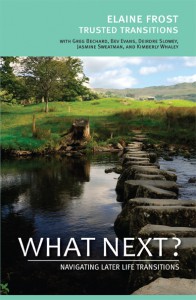
If you are reading this and thinking that it doesn’t apply to you because you don’t have a Will or POA, think again. I was shocked to hear this week that studies show that 56% of Canadians don’t have a will, and 71% don’t have POAs. Just read the chapters in “What Next? Navigating Later Life Transitions” to get a sense of how quickly and badly things can go off the rails if something happens to you and you don’t have well thought out documents in place. And something unexpected can happen to any of us, at any age.
So make this January the starting point for getting these things in place, and keeping them current over time.
0 Comments
December 19, 2012
This week I discovered a great new resource on the web. Developed by Home Instead Senior Care, this “Senior Fraud Protection Kit” has a wealth of information to educate on some of the schemes that a senior may be confronted with. It includes assessment tools and checklists that can be used to help you to ensure that you or a loved one are properly aware and protected against abuse. I encourage you to download the 17 page PDF document, which is now listed in our resources section. Note that the document here is the Canadian version. If you are looking for the U.S. version simply go to http://www.caregiverstress.com/senior-safety/con-cheat-seniors/ and follow the link.
0 Comments
November 10, 2012
November is upon us and inevitably we are experiencing the colder weather and the first signs of the Holiday Season all around us. Decorations and music are appearing in retail stores. Magazines are sharing their best holiday recipes and menus. And the calendar is filling up with seasonal party invitations. It is such a “Merry” time.
But it isn’t necessarily that way for everyone. If you, or someone you know has recently lost a loved one, you may not immediately connect with the spirit of the season. The holidays can be very difficult if you are grieving. But there are things you can do. Please go to our Resources section and take a minute to read “When the Holidays Hurt: 20 Gifts for a Grieving Christmas” by Dr. Bill Webster. I hope it will give you some good ideas on how to handle this special time of year.”
0 Comments
 subscribe to our RSS feed